
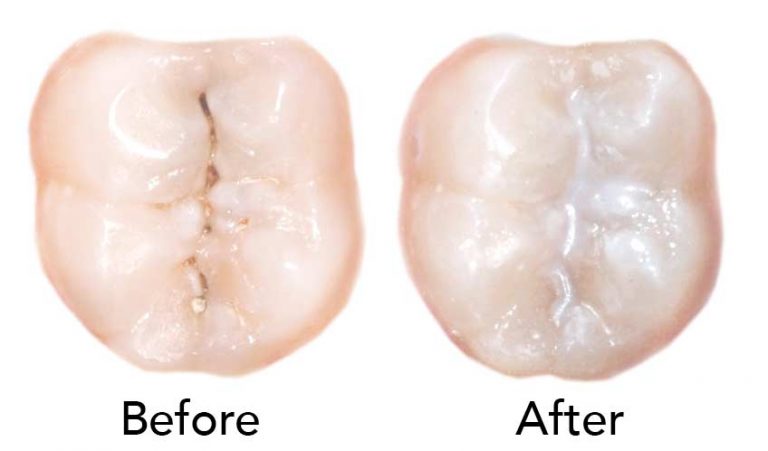
Because the sealants act as a physical barrier to decay and plaque build-up, in most cases, they provide 100 percent protection – with the most important variable being how well the dental sealant adheres to the teeth. In addition, research has shown that sealants stop cavities when placed on top of a slightly decayed tooth. This action seals off the supply of nutrients to the bacteria that cause the cavity. The dental sealant becomes ineffective when all or part of the bond between the tooth and the sealant is broken.
Bright Dental Clinic
One Stop Solution
Home > Dental Sealants
Dental Sealants
What are dental sealants?
Dental sealants are thin, plastic films painted on the chewing surfaces of the back teeth – molars and premolars – and are highly effective in the prevention of tooth decay (caries and cavities). Dental sealants are particularly effective on the back teeth, as the back teeth contain more hard-to-reach pits and grooves that serve as a host to food debris and plaque build-up.
How effective are dental sealants?
Who are likely candidates for dental sealants?
The extent of your treatment process can depend on your individual condition and preferences, but it begins with the placement of dental implants in the jawbone. Modern technology allows us to place fixed temporary bridges on the implants on the day of implant placement. This technology provides us the a very easy transition from bad teeth or no teeth to a beautiful set of temporary teeth all in one visit. The final, permanent implant bridges will fully restore function and comfort. It is the very best option on all of dentistry.
How Can I Maintain My New Teeth?
Sealants are especially beneficial for children because their newly erupted, permanent teeth are most susceptible to cavities and least benefited by fluoride. According to the Centers for Disease Control and Prevention (CDC), sealants should be used as part of a child’s total preventive dental care. A complete preventive dental program includes use of sealants, fluoride, plaque removal, careful food choices, and regular dental care. However, patients of all ages can benefit from dental sealants.
In addition, sealants help to maintain the health of teeth. Each time a tooth is filled due to tooth decay, additional tooth structure is lost. According to the Centers for Disease Control and Prevention (CDC), fillings last an average of six to eight years, after which time they need to be replaced. Therefore, sealants often save time, money, and reduce the discomfort associated with dental treatment procedures.
What does the procedure involve?
The procedure starts with cleaning the surface of the tooth, rinsing the surface to rerriove all traces of the cleaning agent, and drying the tooth. A solution or gel is applied to the surface of the tooth, including the pits and grooves, to make the surface of the tooth rough. After several seconds, the solution is thoroughly rinsed away with water and the site is dried. The liqUid sealant is then applied and allowed to harden.
With proper oral hygiene, sealants may last five to 10 years.
All Services
Menu
Book Appointment
PLEASE FEEL FREE TO CONTACT US FOR EMERGENCY CASE.
On the other hand we denounce with righteous indignation and dislike men who are so beguiled.
+91 2027206131